We’ve written before about Big Boy’s time as a Race2Recovery support truck, and about the DROPS system that let the workshop body come down to ground level for the team’s mechanics. But we haven’t really talked about who those mechanics — and the wider team — actually were.
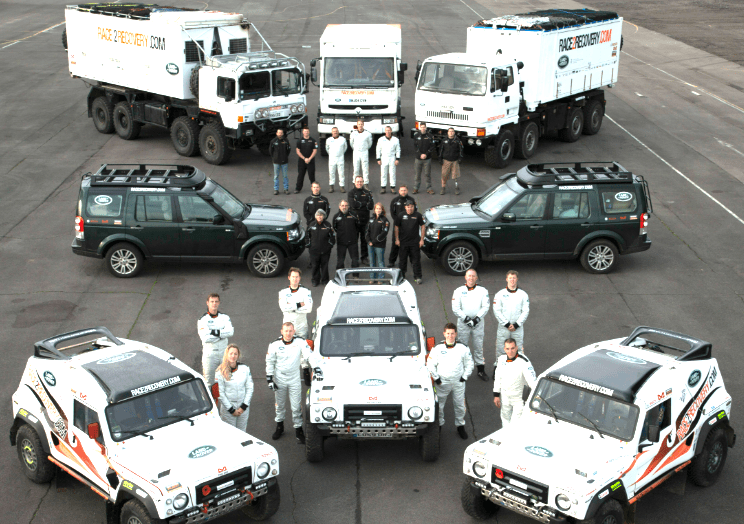
Race2Recovery started small in 2011, founded by a group of wounded soldiers with a single Land Rover Freelander and a handful of members. Within a couple of years it had grown into a genuine rally-raid outfit: four Wildcat race vehicles, a fleet of support trucks and Land Rovers, and a team of sixteen injured soldiers and civilian volunteers. In 2013 they became the first team of amputees to finish the Dakar Rally, and repeated the achievement in 2014 — a result nobody had managed before.
The team’s association with Blesma, the Limbless Veterans charity, runs right through that story. Blesma supports servicemen and women who’ve lost a limb, an eye, or the use of one, and several of Race2Recovery’s founding members are Blesma members themselves. Tony Harris, who founded and drove for the team, lost part of his leg after being caught in a blast in Sangin, Afghanistan in 2009. Daniel “Baz” Whittingham, part of the truck crew, was an IED disposal technician in the same conflict; the device he encountered broke almost every bone below his waist and eventually led to the loss of his leg below the knee. Phillip Gillespie, another team member, was injured on his third tour with 1 Royal Irish.
It’s worth reading the full page on Blesma’s site — it’s a much better telling of their individual stories than we could manage second-hand, and the team also used their two Dakar campaigns to raise well over £250,000 for military charities along the way.
It puts the hookloader and the workshop body in a bit of perspective, really. The engineering is interesting on its own terms, but it existed to solve a real problem for real people who’d earned the right to be frustrated by a badly-placed toolbox and instead just got on with finishing the Dakar.
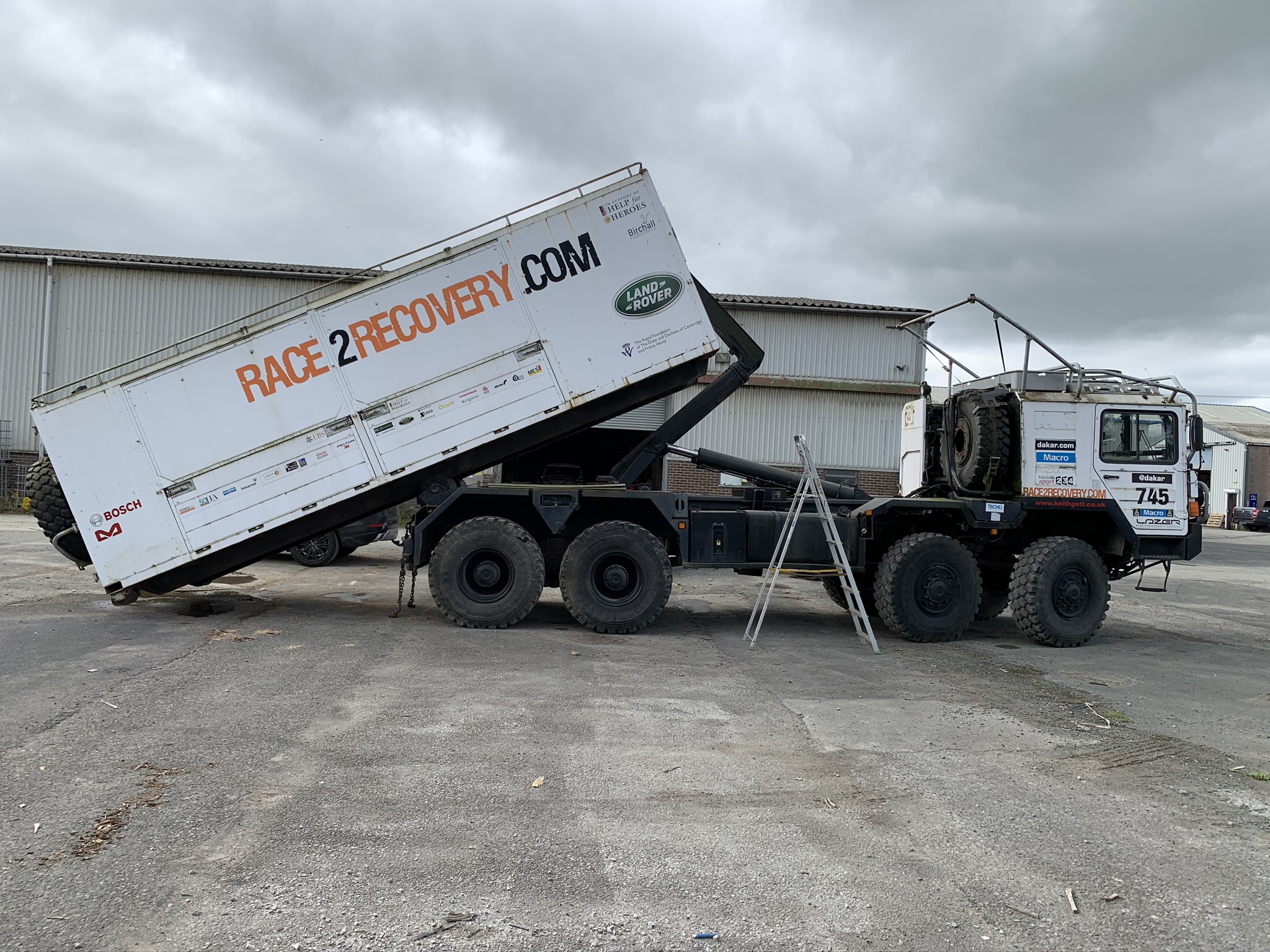
If you’ve seen Big Boy in action — arriving at a show, or lifting and shifting around the yard — you’ll have noticed he doesn’t need a crane, a forklift, or four blokes with a strong back to load and unload. He just… does it himself. That’s DROPS.
So what actually is DROPS?
DROPS stands for Demountable Rack Offload and Pickup System. It’s a hooklift system originally developed for the British Army in the 1980s, designed to solve a very unglamorous but very real problem: getting supplies off a truck and onto the ground (or vice versa) as fast as possible, without waiting around for handling equipment that might not even be there.
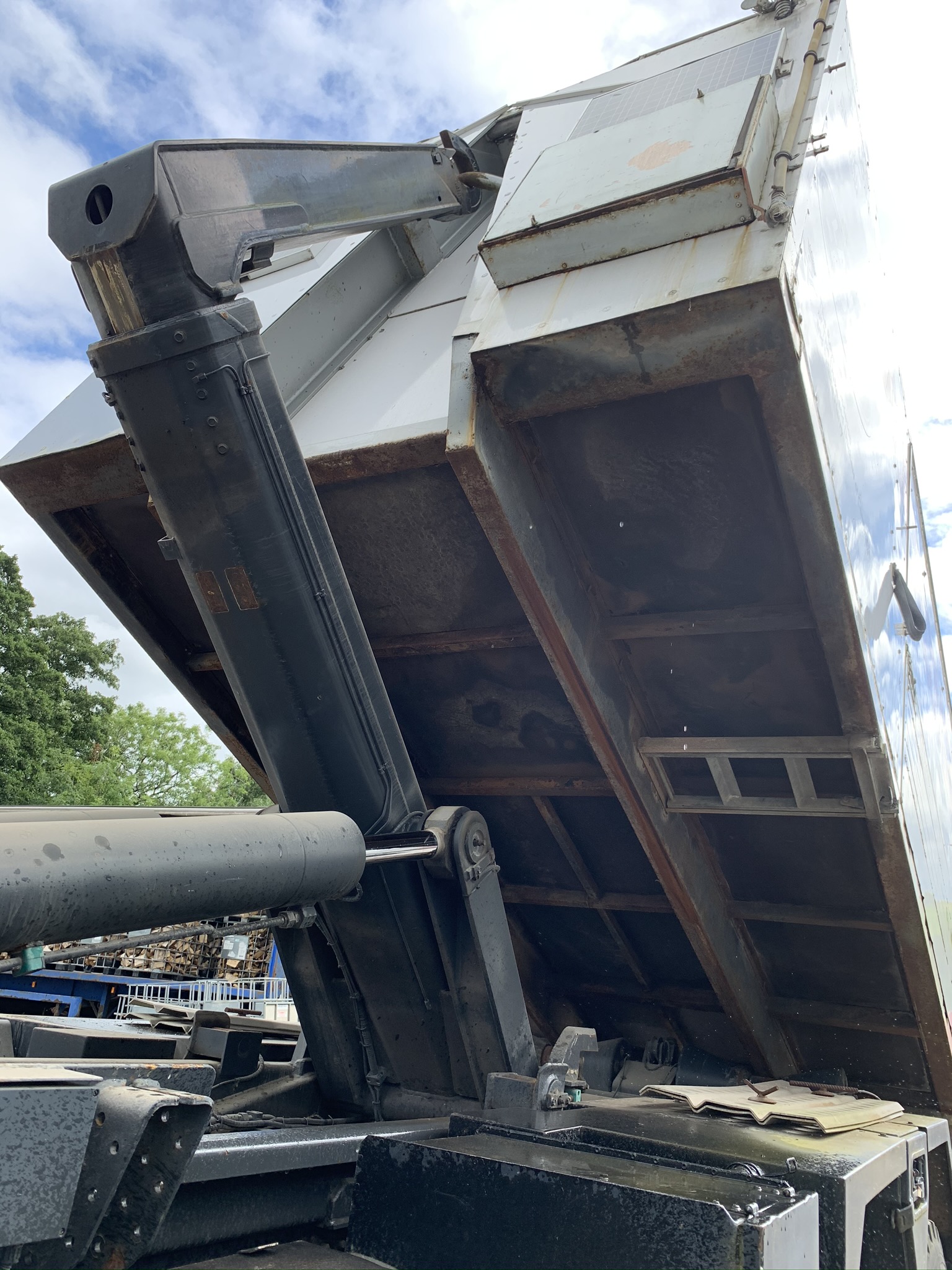
The idea was simple but genuinely clever — build a truck that carries its own loading crew, so to speak. A hydraulic arm mounted behind the cab reaches back, hooks onto a flatrack or ISO container, and winches it up onto the chassis. Reverse the process and the load is set down on the ground just as easily. The whole cycle takes a couple of minutes, no external kit required.
It was born out of Cold War logistics planning for the British Army of the Rhine, when planners realised that fixed-body trucks unloaded by forklift simply couldn’t keep pace with a fast-moving battlefield. DROPS-equipped vehicles like the Leyland DAF and Foden entered service into the early 1990s and ended up proving just as useful in operations well outside the deserts and depots they were originally built for.
Why it matters on a truck like Big Boy
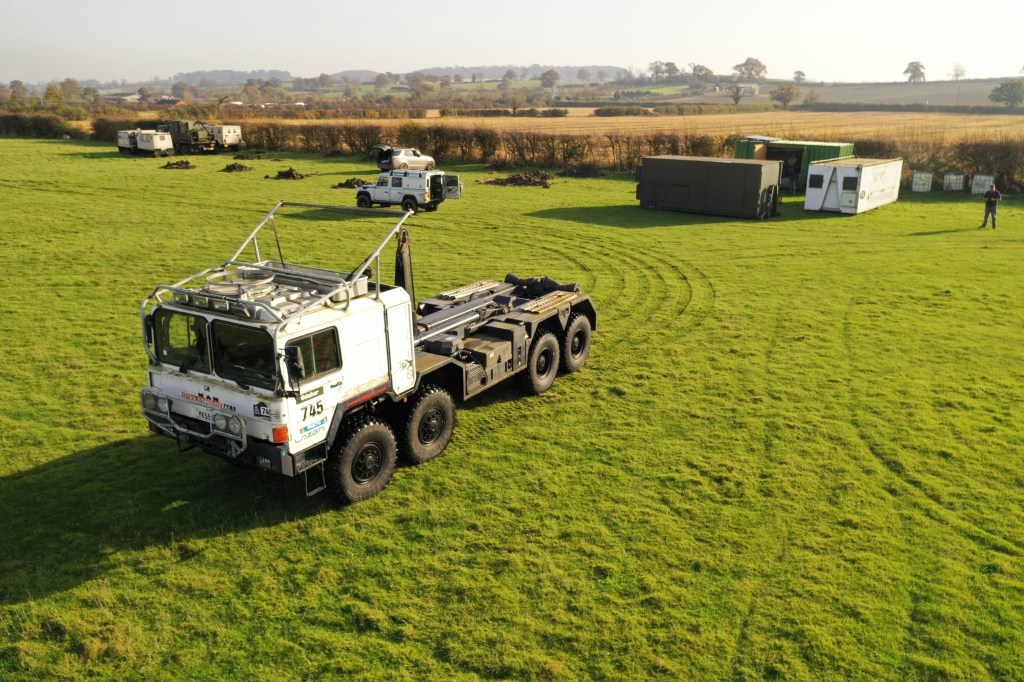
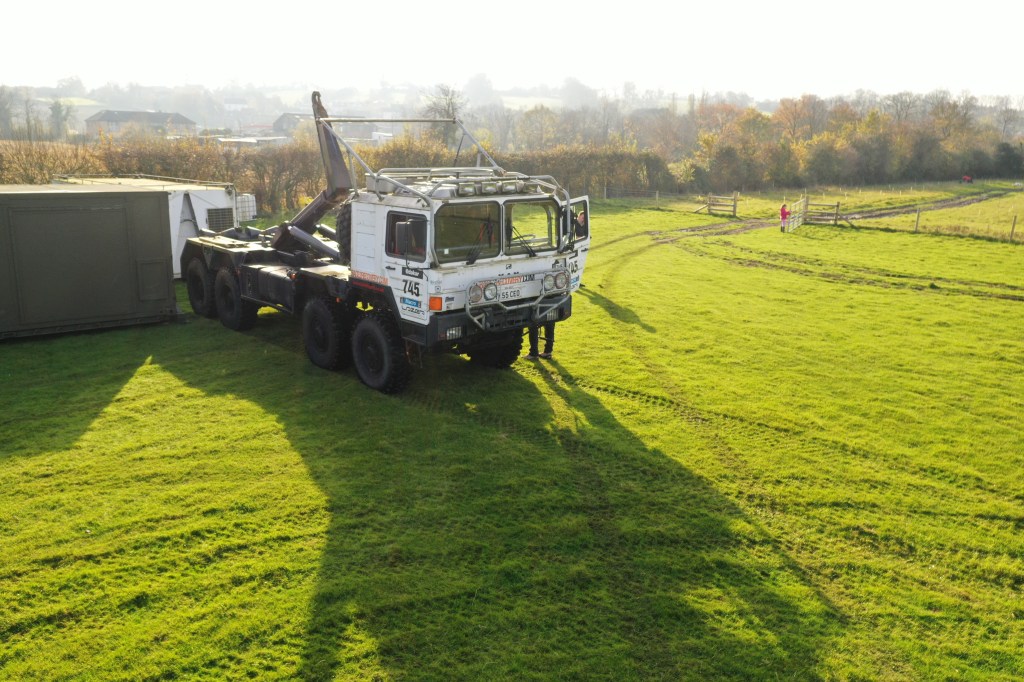
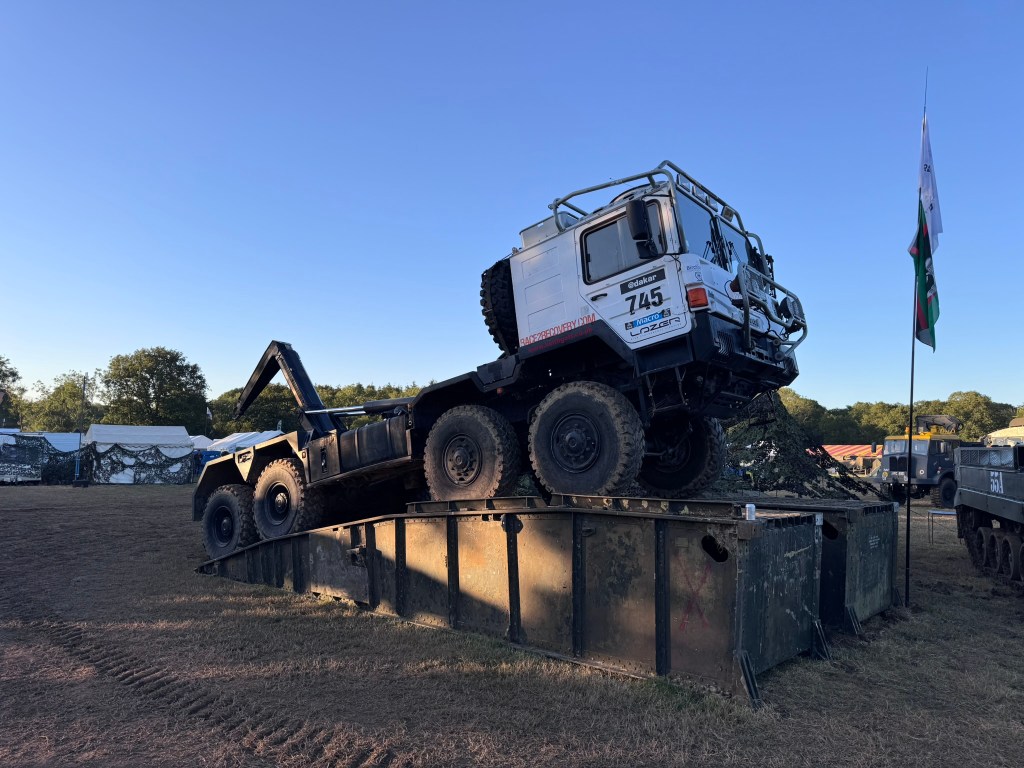
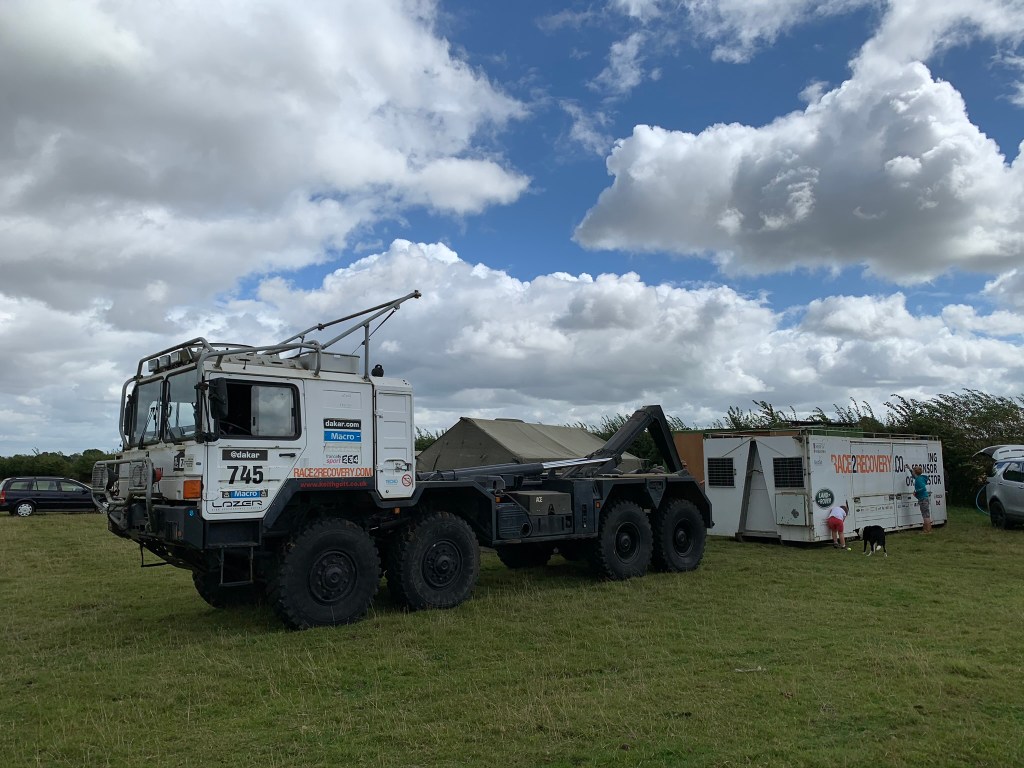
Big Boy’s hookloader is the same fundamental concept — a heavy-duty demountable system fitted to an 8×8 chassis built for serious cross-country mobility. With a carrying capacity in the region of 20 tonnes, he can pick up a loaded flatrack, container, or specialist body straight off the ground and be moving again in minutes, with no dependency on a crane or loading dock.
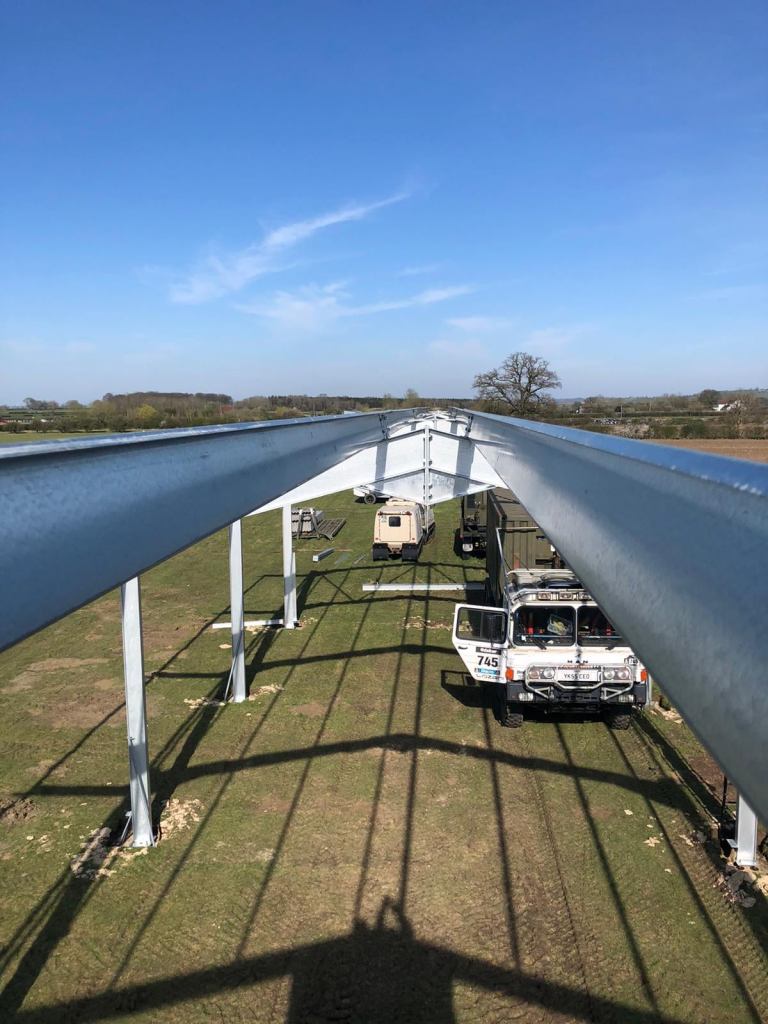
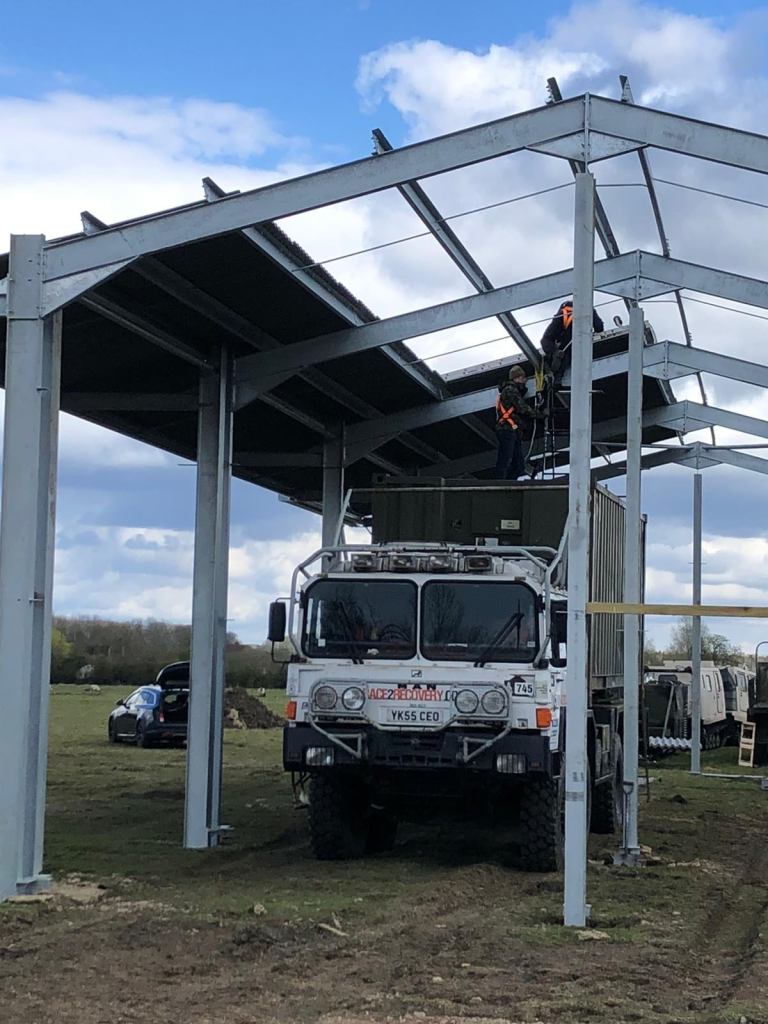
It’s this combination — go-anywhere 8×8 mobility plus self-sufficient loading — that made trucks like this so valuable for military logistics, and it’s exactly the same reason the hookloader remains Big Boy’s headline feature today. Whether it’s swapping bodies, shifting materials around a build site (long-time followers will remember the barn-raising footage), or just showing off at a show, the hookloader is the bit that gets people asking questions.
The Race2Recovery connection
This is where the hookloader stopped being a nice-to-have and became genuinely essential. Race2Recovery’s crew included mechanics who were amputees, and a standard T5-configuration support truck mounts its workshop body high up at the back — great for ground clearance, not so great if you’re climbing in and out on prosthetics multiple times a day, under time pressure, out in the desert.
The team that built the back body designed it specifically to solve that problem. Instead of a fixed high-mounted body, the workshop pod could be set down at ground level whenever it was needed. No climbing, no awkward transfers — just quick, level access to the tools and kit required to keep the Wildcats running. It’s a small detail on paper, but out on rally it’s the difference between a five-minute job and a fifteen-minute one, repeated over and over across a stage.
The short version
DROPS = Demountable Rack Offload and Pickup System
Originated with the British Army in the 1980s/90s for rapid resupply
Hydraulic arm hooks and winches a flatrack/container on or off the chassis
No external handling equipment needed — load or unload solo in a couple of minutes
Big Boy’s hookloader runs on the same principle, giving him serious self-loading capability to go with his 8×8 mobility
Next time you see Big Boy quietly picking up a flatrack like it’s nothing, you’ll know there’s a proper bit of military engineering history behind that party trick.
Before Big Boy ever turned a wheel in support of a Dakar campaign, he was born into one of the most demanding vehicle programmes of the Cold War. To understand what makes the MAN KAT1 8×8 such a capable base for a truck like Big Boy, it’s worth going back to where the design came from — and why it was built the way it was.
A Cold War Problem: Keeping Up With Tanks
The story starts in the early 1960s. West German military planners were drawing up requirements for a new generation of army vehicles, and the brief was demanding: a family of trucks across the 4 to 10 tonne payload range, able to cross severe terrain while keeping pace with main battle tanks. Nothing off the shelf could do that job, so no single manufacturer took it on alone. Instead, a joint venture was formed under MAN’s leadership, bringing in Klöckner-Humboldt-Deutz, Rheinstahl-Henschel, Krupp, and Büssing (later absorbed into MAN outright in 1971).
The result of that collaboration was a truck family the Bundeswehr classified as Kategorie 1 — KAT1 for short. Officially, these trucks were “mil gl”: militarisiert geländegängig, or “militarised, cross-country capable.” Unofficially, troops just called them the “5-, 7-, 10-, 15-Tonner” after their payload class, and “Tonner” became Bundeswehr slang for “truck” more generally.
The 8×8 Comes First
It’s a detail that surprises people who assume the smaller 4×4 and 6×6 KAT1s came first: the 8×8 configuration — Big Boy’s configuration — was actually the first KAT1 model to enter production. The procurement treaty between the Bundeswehr and MAN was signed on 4 December 1975, and deliveries of the 8×8 began in 1976, with the 6×6 and 4×4 variants following in 1977.
By the time the initial production run wound down in the early 1980s, over 8,600 KAT1s had been delivered to the Bundeswehr across all configurations.
Built to a Brief, Not a Budget
Every KAT1, regardless of axle count, shares the same underlying philosophy: a torsionally rigid box-section chassis frame, with rigid hub-reduction axles sprung on coil springs and shock absorbers rather than conventional leaf springs. That gives the long-travel, high-articulation ride that makes these trucks so capable off-road.
One particularly deliberate design choice: the engine sits behind the driver’s compartment rather than underneath it, keeping the overall vehicle height below 2.9 metres. That wasn’t just about ground clearance — it meant KAT1s could still be transported on standard rail flatcars, a genuinely Cold War logistics requirement (moving armour and support vehicles by rail across Europe at speed).
The A1 Generation
The KAT1 didn’t stand still. From 1988, an upgraded A1 generation introduced improved engines, a revised chassis and cab, and — notably for the 8×8 — a new 15,000kg payload class as a direct replacement for the original 10,000kg trucks. The A1 generation also marked a shift toward using more standard commercial parts, drawing driveline components from MAN’s F90 heavy truck range introduced in 1986. Around 1,100 A1 models were built for the Bundeswehr.
Given Big Boy’s ZF 16S251 gearbox and WSK torque converter/retarder setup, this A1-era driveline is exactly the specification he carries — a truck built not just to the original 1970s KAT1 brief, but to the refined, more powerful standard that followed it.
From Active Service to Second Life
KAT1s underwent a full overhaul in the mid-1990s specifically to extend their service life by another decade — which is a large part of why so many well-maintained examples eventually found their way onto the civilian market rather than being scrapped outright. The broader KAT1 lineage itself kept evolving long after, into the MAN SX range, which stayed in production until as recently as 2019.
It’s also worth noting the KAT1 8×8’s reach beyond Germany: the US Army and US Air Force operated their own derivatives of the design, and one variant — the M1001 — served as the prime mover for the Pershing II nuclear missile system. This was never a niche, low-volume design; it was a Cold War logistics backbone.
Why It Matters for Big Boy
Trucks like Big Boy don’t end up as capable overland and expedition platforms by accident. The KAT1 8×8 was engineered from day one to carry serious loads over terrain that would stop most conventional trucks, and to keep doing it reliably for decades under military duty cycles. That same robustness is exactly why, decades after leaving active Bundeswehr service, this platform proved itself again — this time supporting a very different kind of mission, as part of the Race2Recovery team’s historic 2013 Dakar Rally campaign.
Long before Big Boy came to us, he was already part of one of the most remarkable stories in Dakar Rally history. This is the tale of Race2Recovery — the team Big Boy served as a support truck — and how he came to carry their colours across some of toughest terrain on Earth.
Who Were Race2Recovery?
Race2Recovery was formed by injured servicemen recovering at Headley Court, the UK’s Defence Medical Rehabilitation Centre. The idea grew out of a conversation between Corporal Tom Neathway — a triple amputee who lost both legs and an arm in Afghanistan — and Captain Tony Harris, who went on to become the first amputee driver to enter the Dakar Rally, using a specially adapted clutch pedal.
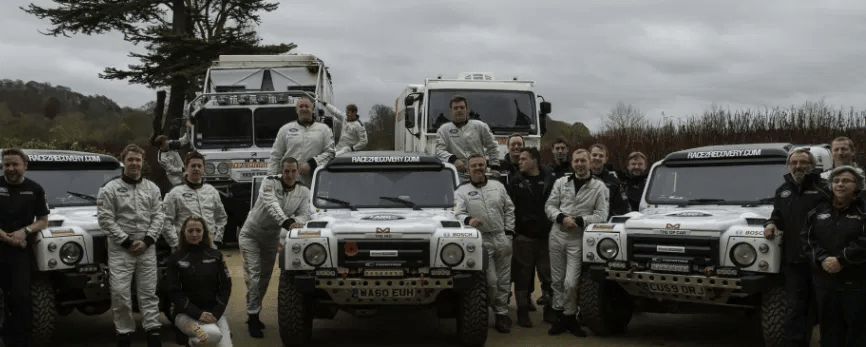
What started as an ambition between two men grew, in around 18 months, into a 28-strong team of servicemen, veterans, and civilian volunteers, backed by Land Rover and racing under the motto: “Beyond Injury – Achieving The Extraordinary.”
The 2013 Dakar — Making History
In January 2013, Race2Recovery entered the Dakar Rally — often called the toughest race on Earth — and became the first ever disability team to complete it. The numbers alone are brutal: 8,570 km of racing across Peru, Argentina and Chile, through giant dunes and the Atacama Desert, with the longest single stage running 852 km.
The team ran four Land Rover Defender-based “Wildcat” race cars, each crewed by a driver and co-driver, at least one of whom was an amputee. Racing in pairs, the Wildcats supported each other across the course.
Behind them was a proper support convoy:
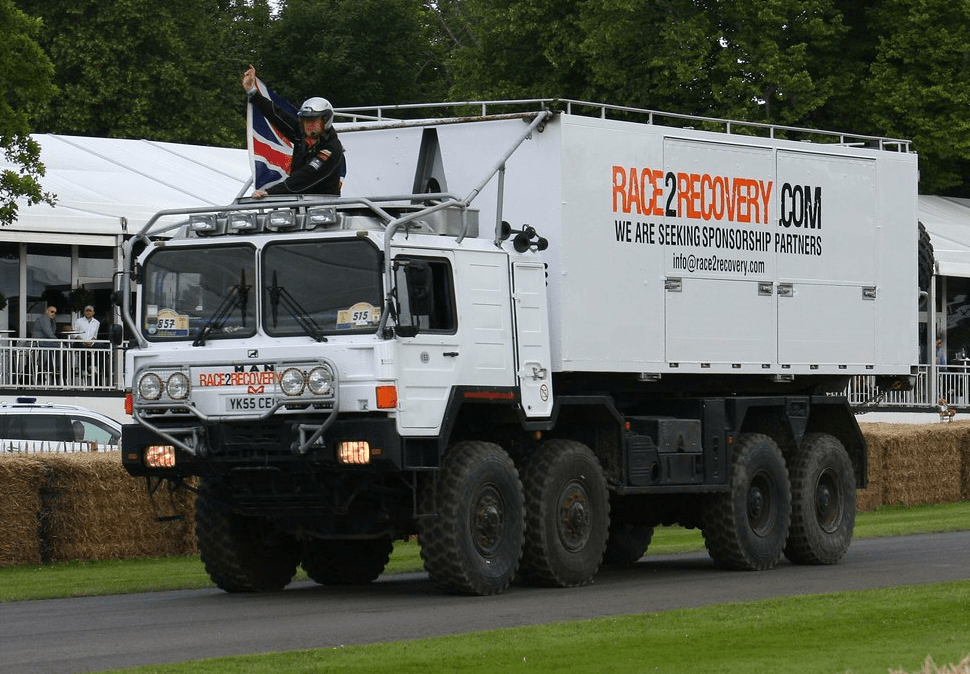
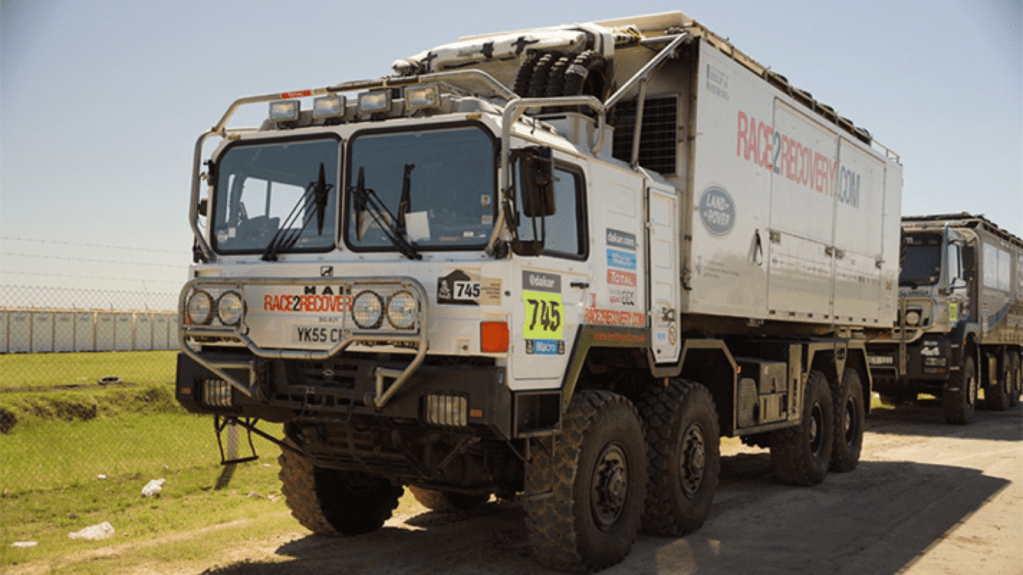
Two 8×8 support trucks — one MAN, one DAF — providing the team’s mobile service areas
A Renault Kerax 4×4 racing truck doubling as a mobile workshop
Several Land Rover Discoverys, ferrying mechanics and team management
While the Wildcats and Kerax ran the race route itself, the 8x8s and Discoverys took a separate liaison route, arriving ahead to set up service areas so the race crews had support waiting at every stop.
The achievement earned Royal recognition too — Race2Recovery became the first ever recipient of a grant from the Endeavour Fund, set up by the Duke and Duchess of Cambridge and Prince Harry, who sent the team a personal note of congratulations.
2014 and Beyond
The team returned for the 2014 Dakar, though that year’s campaign shifted focus — both Wildcat race cars were forced to retire, and the team concentrated its efforts on getting the race truck to the finish, chasing a second consecutive Dakar completion.
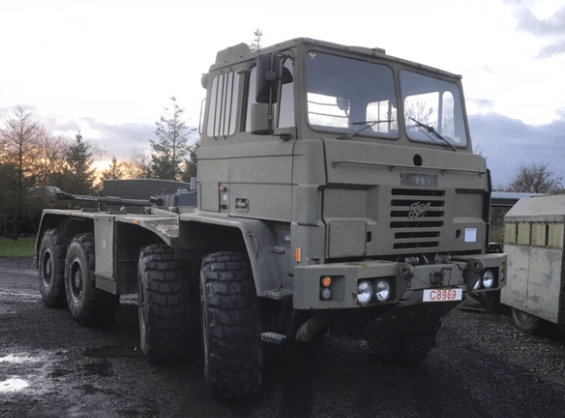
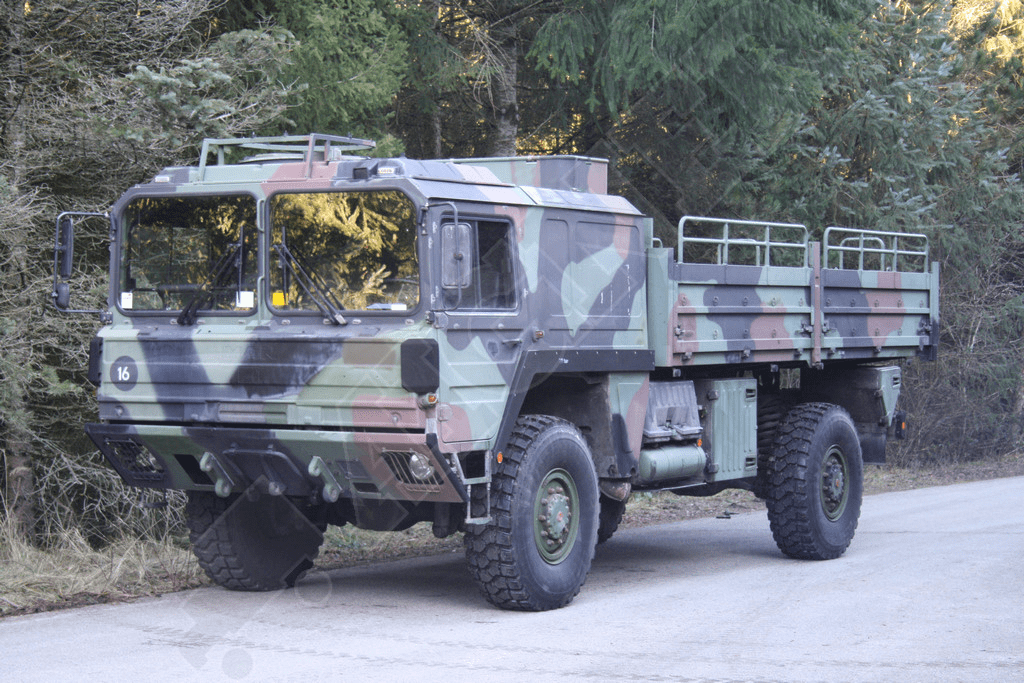
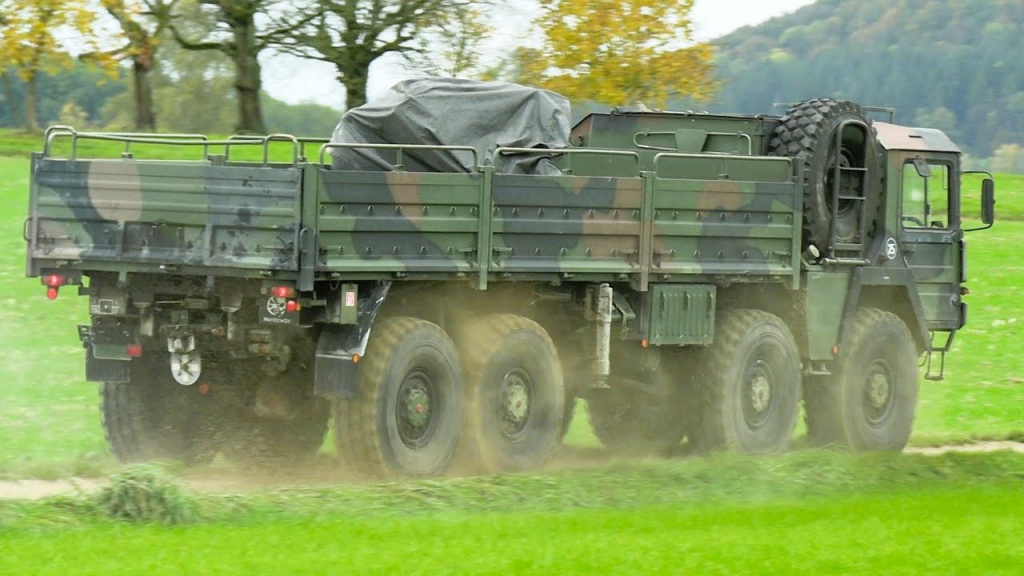
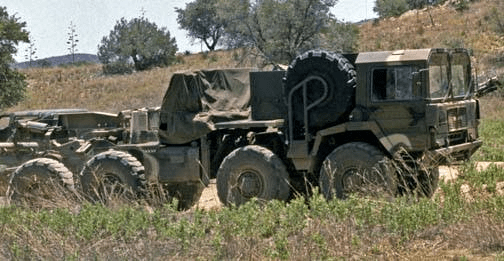





 MAN 8x8